
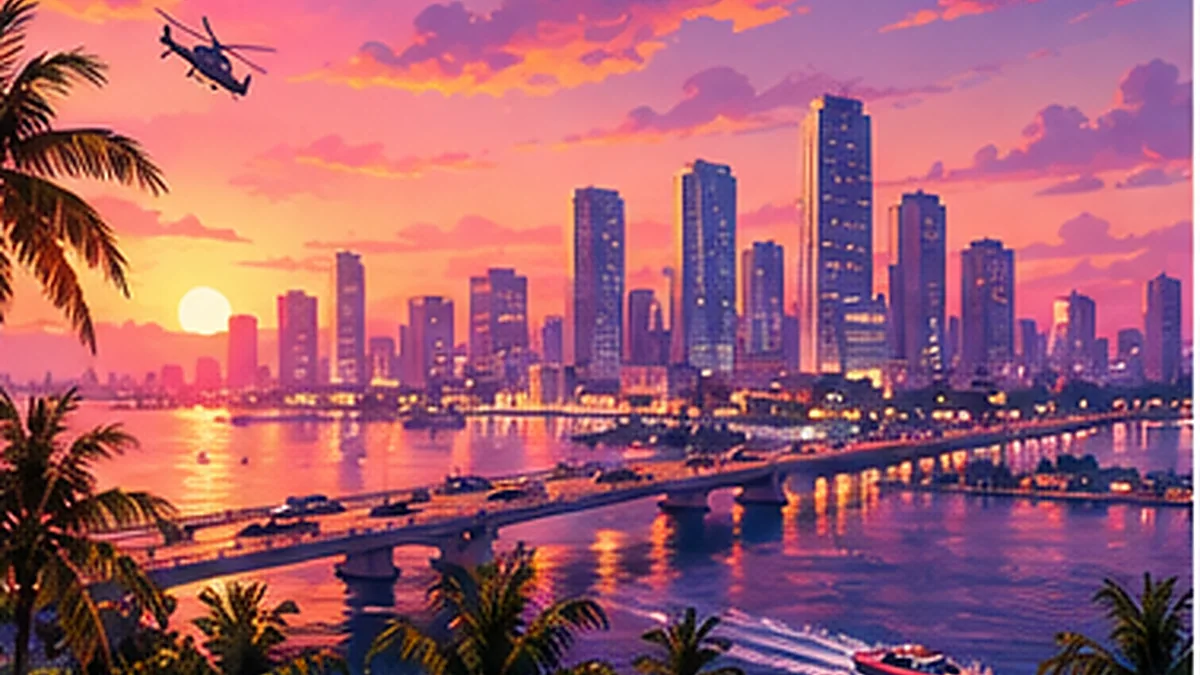
Vice City still has its palm trees and nightlife. Rockstar's newer descriptions, though, place those familiar images beside conspiracies, property empires and the pursuit of a better life.
Interpretation based on Rockstar's published biographies, location material and music hub as of November 18, 2026; no retail gameplay experience is implied.
Nostalgia is the setting, not the whole argument
An audience familiar with the original Vice City may associate the name with a stylized 1980s crime fantasy. The new game keeps recognizable coastal imagery, but Rockstar is presenting a contemporary state, Leonida, rather than advertising a period recreation. Neon signs and beaches create continuity; the people inhabiting those streets introduce different pressures.
This matters for satire because the same location can carry two cultural meanings. To returning players, a pink-lit boulevard recalls an older game's tone. In the new character biographies, similar scenery is associated with precarious work, informal economies and expensive status. That contrast is an editorial reading of Rockstar's published material, not a claim about a mission we have played.
The characters describe economies of attention and influence
Rockstar's official biography of Cal Hampton centers on internet-fed paranoia and monitoring Coast Guard communications. Boobie Ike, another advertised Vice City figure, has turned street credibility into a business empire involving property, a club and music. Their descriptions connect entertainment, rumor and money without requiring a made-up plot twist.
These are useful examples because the joke is not only that someone is outrageous. Cal treats the internet as an engine for belief; Boobie converts a public image into commercial leverage. Both descriptions place reputation alongside material power. A story can make fun of its characters while still showing that their behavior is rewarded by the environment around them.
Leonida's geography widens the target
Rockstar has named six regions: Vice City, the Leonida Keys, Port Gellhorn, Ambrosia, Grassrivers and Mount Kalaga National Park. The accompanying media contrasts urban nightlife with industrial areas, small-town coast, wetlands and wooded country. Those differences imply a broader social canvas than one downtown skyline.
The regions need not have equal narrative importance to matter. A state containing beachfront luxury, industrial work and remote landscape can stage different kinds of aspiration and conflict. However, screenshots cannot prove which interiors are accessible, which roads link the areas or how the finished story uses them.
What remains an interpretation
The promotional material supports an argument about themes: the performance of wealth, the spread of suspicious beliefs and the distance between a promised paradise and the lives of people working inside it. It does not establish whether Rockstar handles those themes well, whether missions respond to player choices, or whether every joke lands.
Those judgments belong to criticism of the released work. For now, Vice City looks interesting not because the 1980s have disappeared, but because the old iconography is being used as a backdrop for newer anxieties about attention, security and social mobility.